
What Is Polysomnography?
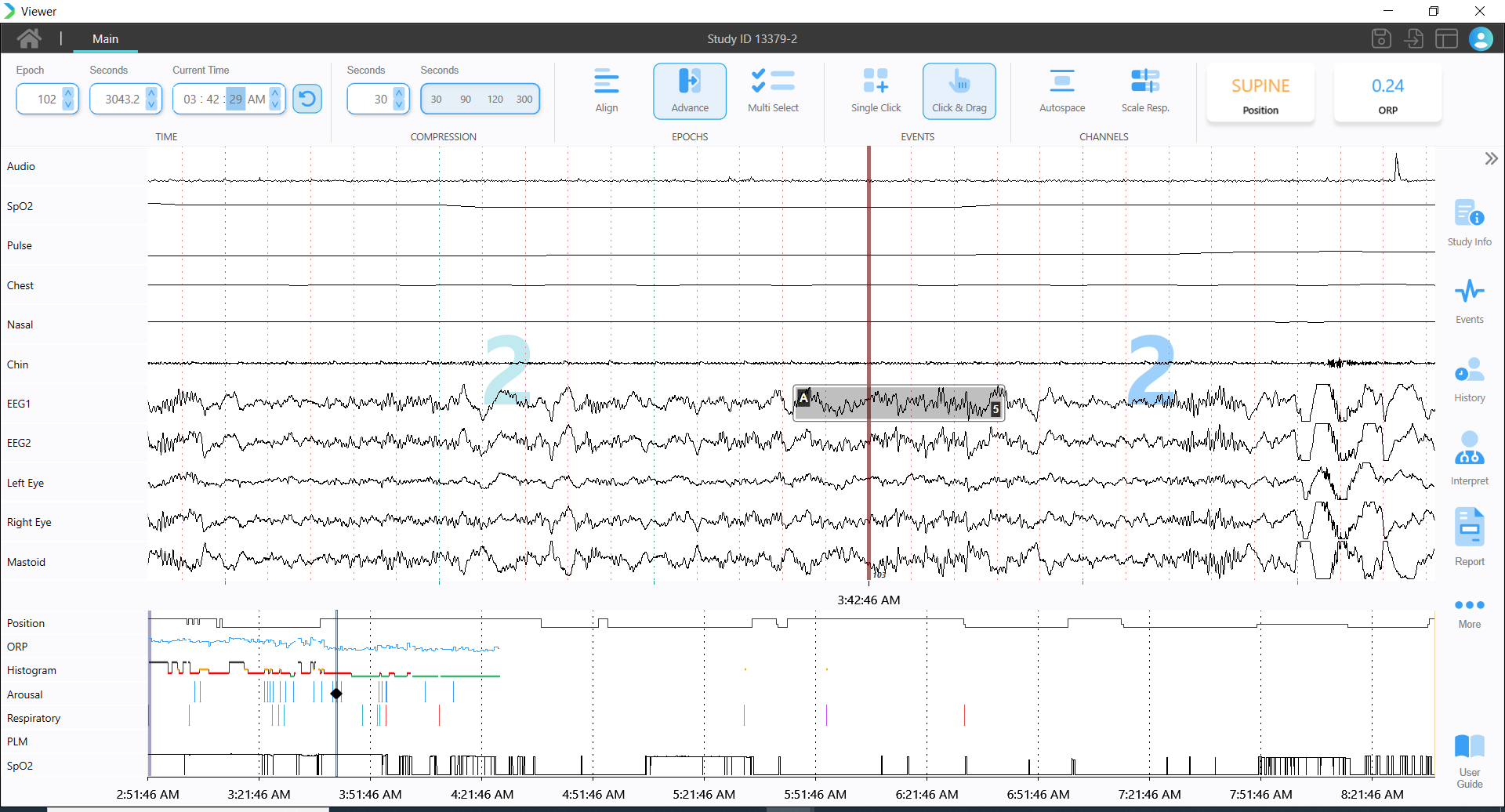
Polysomnography is a comprehensive sleep test that records several physiological systems at the same time. The word is built from poly for “many,” somno for “sleep” and graphy for “recording.” In practical terms, it means monitoring brain activity, eye movements, muscle tone, breathing, blood oxygen and heart rhythm throughout the night.
The test is usually performed in a sleep laboratory with a technologist monitoring the signals from another room. It is often called an overnight sleep study, although that phrase is also used more broadly for home sleep apnea testing. The two procedures are related, but they are not identical.
What Does Polysomnography Record?
Before bedtime, a technologist attaches small electrodes and sensors to the patient’s scalp, face, chest and legs. Flexible bands measure movement of the chest and abdomen. A nasal sensor measures airflow, while a pulse oximeter attached to a finger records blood-oxygen saturation. The wires are long enough for the patient to turn over and change position in bed.
Each group of sensors answers a different question.
Electroencephalography, or EEG, records electrical activity in the brain. Electrooculography tracks eye movements, and electromyography measures muscle activity, usually at the chin and legs. Together, these signals allow a sleep specialist to distinguish wakefulness from rapid-eye-movement sleep and the three stages of non-REM sleep.
That distinction matters. Suppose a patient lies in bed for eight hours but sleeps for only six. Because polysomnography identifies actual sleep, respiratory events can be calculated against those six hours rather than the entire recording period. This produces the apnea-hypopnea index, or AHI: the average number of apneas and hypopneas per hour of sleep.
The respiratory channels show whether airflow stopped because the upper airway became obstructed or because the brain temporarily failed to send an effective signal to breathe. Oxygen and heart-rate recordings reveal what happened during and after each event. Leg sensors can identify periodic limb movements, while synchronized video may document movements or behaviors that cannot be understood from electrical signals alone.
A sleep specialist does not simply open a computer-generated summary the next morning. The recording is divided into 30-second periods called epochs. Sleep stages, arousals, respiratory events and movements are scored according to defined criteria before the full study is interpreted.
What Can Polysomnography Diagnose?
Obstructive sleep apnea is a common reason for ordering polysomnography, but it is not the only one. The test can help investigate central sleep apnea, sleep-related hypoventilation, periodic limb movement disorder and unusual nighttime behaviors.
Consider a patient who shouts, punches or kicks while apparently acting out a dream. That history raises a different clinical question from routine snoring. Video, chin muscle activity and brain-wave recordings can help determine whether the behavior occurs during REM sleep and whether the normal loss of muscle tone during REM is absent. A standard home sleep apnea test is not designed to make that assessment.
Similarly, someone experiencing overwhelming daytime sleepiness and sudden sleep attacks may undergo overnight polysomnography before a multiple sleep latency test the following day. The overnight study documents prior sleep and checks for other explanations, including sleep apnea. The daytime test then measures how quickly the patient falls asleep during scheduled nap opportunities and whether REM sleep appears unusually soon.
Polysomnography is also preferred in certain medically complicated cases. American Academy of Sleep Medicine guidelines recommend it instead of home apnea testing for patients with significant cardiorespiratory disease, possible respiratory muscle weakness, suspected sleep-related hypoventilation, chronic opioid use, a history of stroke or severe insomnia.
What Is a Split-Night Study?
A split-night polysomnogram combines diagnosis and treatment adjustment during one appointment. During the first part of the night, the laboratory records the patient’s untreated sleep. If the results demonstrate sufficiently clear obstructive sleep apnea and enough time remains, the technologist introduces positive airway pressure and adjusts it during the second part of the night.
This can spare a patient from returning for a separate PAP-titration study. It is not appropriate in every case, however. If too little diagnostic information is collected or there is insufficient time to evaluate treatment properly, another night may still be necessary.
How Is It Different From a Home Sleep Apnea Test?
A home sleep apnea test uses fewer sensors and is intended primarily to diagnose obstructive sleep apnea in appropriate adults. Typical devices record airflow, respiratory effort, blood oxygen and heart rate; some collect additional signals. Most do not record the EEG, eye movements and chin muscle activity required for conventional sleep staging.
That narrower design is a feature when the clinical question is narrow. An otherwise uncomplicated adult who snores heavily, has witnessed breathing pauses and struggles with daytime sleepiness may not need a laboratory to establish obstructive sleep apnea. Clinical guidelines recognize a technically adequate home test as an appropriate diagnostic option for such patients when moderate-to-severe OSA is suspected.
Polysomnography becomes more useful when symptoms point beyond straightforward obstructive sleep apnea, when the medical history increases the complexity of testing or when a home result does not explain convincing symptoms. A negative or inconclusive home test should not be treated as definitive when suspicion remains; guidelines recommend laboratory polysomnography in that situation.
The choice is therefore not between a “real” test and a lesser imitation. It is between two tests designed to answer different clinical questions. Home testing concentrates on breathing. Polysomnography documents how breathing, brain activity, muscle tone, movement and heart function interact across a measured night of sleep.
Sources
- American Academy of Sleep Medicine: Clinical Practice Guideline for Diagnostic Testing for Adult Obstructive Sleep Apnea
- Journal of Clinical Sleep Medicine: Clinician-Focused Overview of Polysomnography
- Sleep Medicine Reviews: Reinventing Polysomnography in the Age of Precision Medicine
- Mayo Clinic: Polysomnography
- Mayo Clinic Press: Decoding Sleep Apnea Tests—Home vs. Sleep Clinic Studies
- Johns Hopkins Medicine: What Happens in a Sleep Study?
- Johns Hopkins Medicine: What to Know About an At-Home Sleep Test