
Could a Bedtime Pill Treat Sleep Apnea? The FDA Is Deciding
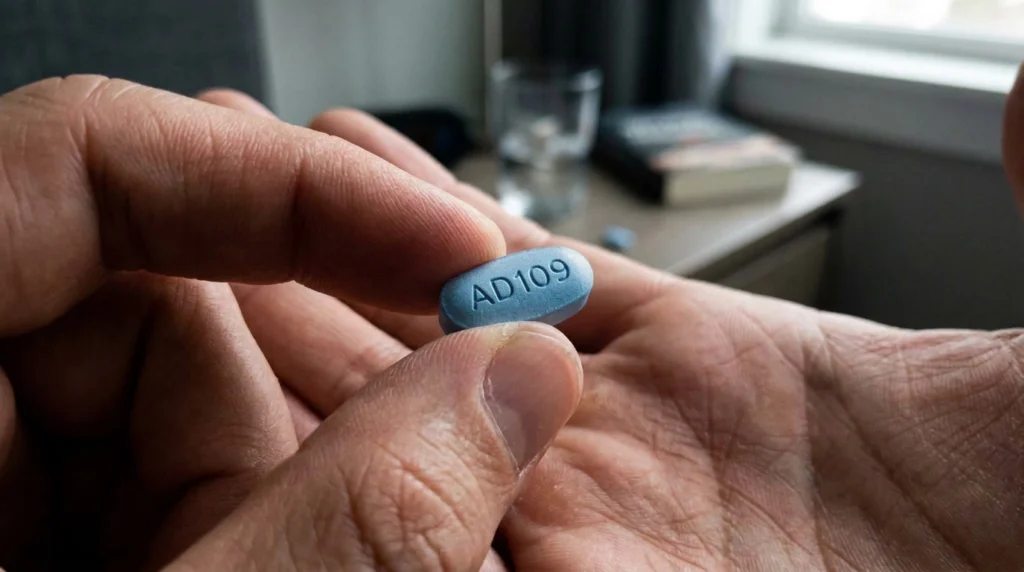
For people who have tried positive airway pressure and cannot sleep comfortably with the mask, hose or forced air, a pill taken before bed would be a fundamentally different option. That possibility has moved beyond small laboratory experiments: the FDA is now reviewing an oral treatment designed to prevent the throat from closing during sleep.
The tablet is known during development as AD109, and its proposed brand name is Oxnimbi. It combines two drugs that increase the activity of muscles responsible for holding the upper airway open. Its manufacturer announced in July 2026 that the FDA had accepted the application for review. The agency has set February 28, 2027, as its target date for a decision.
The pill is not yet approved or commercially available. The evidence submitted to the FDA shows that it reduced interrupted breathing and nighttime oxygen loss. It also caused enough side effects that approximately one in five participants in a major trial stopped taking it.
Keeping the Tongue and Throat Active During Sleep
Obstructive sleep apnea is commonly described as a blocked airway, but that description leaves out the role of muscle control. While a person is awake, muscles in the tongue and throat help maintain an open passage for air. Those muscles receive less stimulation after sleep begins. In someone with a narrow or easily collapsible airway, that reduction can allow the tongue and surrounding tissue to move inward.
The investigational pill combines atomoxetine and aroxybutynin. Atomoxetine is already prescribed for ADHD. It raises the level of norepinephrine available to parts of the nervous system, strengthening the signal sent to upper-airway muscles. Aroxybutynin blocks nerve activity that suppresses those muscles, particularly during REM sleep.
The intended result is more activity in the genioglossus—the large muscle that moves the tongue forward—and other muscles surrounding the throat. A review of the drug’s proposed mechanism explains how the two components are intended to work together across different stages of sleep.
The pill addresses muscle activity, not every factor that produces sleep apnea. Jaw structure, tongue size, fat deposits around the airway, breathing stability and sensitivity to sleep disruption can also determine whether someone develops the condition.
The Idea Began With 20 Sleepers
The research began with a striking but very small experiment. In a 2019 study involving 20 adults, participants spent one night taking atomoxetine and oxybutynin and another taking a placebo. Their median apnea-hypopnea index fell from 28.5 breathing events per hour with placebo to 7.5 with the drug combination.
The apnea-hypopnea index, usually shortened to AHI, records how many times breathing stops or becomes substantially restricted during each hour of sleep. An AHI from 5 to 14 is generally considered mild sleep apnea, 15 to 29 moderate and 30 or higher severe.
Reducing the median AHI from 28.5 to 7.5 in a single night was enough to justify larger studies. It was not enough to establish that the treatment would keep working or remain tolerable when taken every night.
The developers subsequently replaced oxybutynin with aroxybutynin, a more targeted version of the same drug. A four-week trial involving 211 adults then found that the selected combination reduced median AHI from 20.5 to 10.8 events per hour.
Breathing Improved, but Results Varied
The most informative study so far is SynAIRgy, a six-month trial conducted at 69 sleep centers in the United States and Canada. It enrolled 646 adults with mild, moderate or severe obstructive sleep apnea. All had refused positive airway pressure or previously found it intolerable.
Half received the active pill before bed and half received a placebo. Overnight sleep studies measured their breathing before treatment and again during the trial.
After 26 weeks, the median AHI among people assigned the pill had fallen from 19.8 to 13.3 events per hour. The placebo group changed from 19.1 to 17.7. The middle of the treatment group had therefore moved from moderate sleep apnea into the mild range, but most participants still had sleep apnea.
A statistical model produced the larger percentage often used in reports about the trial: AHI fell by an estimated 44.1% in the treatment group and 17.6% in the placebo group. The average advantage over placebo was approximately four fewer breathing interruptions per hour.
Some people responded much better than others. In the study’s main analysis, 25.8% of those assigned the pill reduced their AHI by at least half. The placebo figure was 19.8%, and the difference was not statistically significant. A separate analysis limited largely to people who stayed on treatment produced better numbers, but that analysis gives less weight to the substantial dropout rate.
The pill also reduced the frequency of overnight oxygen drops and the total amount of oxygen loss associated with breathing events. Improvements that patients could feel were harder to establish. Fatigue declined in both groups, but the treatment did not produce a statistically greater improvement than placebo. Ratings of sleep-related impairment were also similar.
Why A Percentage of the Participants Dropped Out of the Trial
Dry mouth was reported by 35.4% of participants receiving the pill. Insomnia affected 20.6%, nausea 11.4% and difficulty beginning urination 8.9%. A heart rate of at least 100 beats per minute was recorded during treatment in 6.3%, compared with 1.9% of the placebo group.
Investigators attributed no serious adverse events to the treatment. Still, 21.2% of participants stopped taking it because of side effects, compared with 3.1% receiving placebo. Most withdrawals occurred early, suggesting that tolerability may become apparent within the first weeks.
A second large trial, LunAIRo, followed 660 adults for almost a year. At 26 weeks, the principal analysis estimated that AHI had fallen by 33.7% with the pill and 7.3% with placebo. Full results have been presented at a medical conference and disclosed to regulators, but a complete peer-reviewed paper had not appeared by October 2026.
The manufacturer’s filing with the Securities and Exchange Commission says the FDA requested additional analysis showing that the changes measured in the trials represented a meaningful clinical benefit. The agency also questioned limitations in the patient questionnaires. The company says it supplied the requested analysis.
Where a Sleep Apnea Pill Could Fit
Positive airway pressure remains an established treatment, and this pill has never been compared directly with properly used CPAP. The trials answer a narrower question: does it work better than placebo in adults who have refused or cannot tolerate positive airway pressure? For breathing and oxygen measurements, the answer was yes. For fatigue and perceived sleep impairment, the advantage was not established.
It would not be the first medication approved for sleep apnea. The FDA approved the injectable weight-loss drug tirzepatide in 2024 for adults with obesity and moderate-to-severe obstructive sleep apnea. The new pill would be the first oral treatment designed specifically to increase upper-airway muscle activity during sleep.
If it receives approval, testing will remain essential. The trials show why symptoms alone cannot reveal whether the treatment is working: one person may have a major reduction in breathing interruptions, while another may feel similar but retain clinically significant apnea. A sleep study establishes the starting point; repeat testing shows whether the airway has actually become more stable.
A pill would be simpler to take than using a mask or undergoing a procedure. The FDA’s decision will turn on a less simple calculation: whether the improvement in breathing is large enough, in enough patients, to justify the treatment’s side effects.